In eight years of home styling across Delhi, Noida, and Jaipur, I have walked into hundreds of Indian homes where every furniture decision has been made thoughtfully — sofa, dining table, lighting, rugs — and the wall clock is a ₹400 plastic disc from a supermarket, hung three feet too high on the wrong wall. The clock is the afterthought. And it ruins the wall it sits on.
This article is about why that happens and how to fix it. There are exactly three mistakes. They are consistent across every city I’ve worked in, every budget level, every interior style. Fix any one of them and the wall improves. Fix all three and the room transforms.
The clocks I’m recommending come from Shopps.in’s wall clock collection — metal, resin, mosaic and wooden pieces from ₹370 to ₹12,733, all IGST-inclusive with free delivery across India.
01
Mistake One
Wrong Size — Almost Always Too Small
Walk through a typical Indian apartment in any metro city. The living room wall clock is almost certainly between 10 and 14 inches in diameter. The wall it’s on is between 10 and 14 feet wide. The result: a coin-sized object on a wall the size of a cinema screen.
People choose small clocks for two reasons. First, they shop by price and small clocks are cheaper. Second, they shop online and product photos don’t convey scale — a 12-inch clock photographed on a 6-foot wall looks proportional, and then arrives looking like a bathroom fixture in your living room.
The rule: For a living room with 9–10 foot ceilings and a 10–14 foot TV or feature wall, a clock needs to be at least 18–24 inches (45–60 cm) to register as a design element rather than a utility object. For a statement piece: 24–36 inches. Anything smaller goes in a bedroom or study.
Fix:Measure your wall before searching for clocks. Write the wall width down. Then filter products by size — look for pieces above 18 inches for any main room.Feather & Birds — ₹12,733 →
“A 12-inch clock on a 12-foot wall is not a design decision. It’s a utility object that happens to be hanging.”
02
Mistake Two
Wrong Wall — Usually Too High or Too Isolated
Indian wall clocks are hung too high in almost every home I’ve visited. The reasoning: “It should be visible from anywhere in the room.” The result: you need to tilt your head back to read the time, and the clock looks marooned near the ceiling with empty wall below it.
The second placement error is hanging the clock in isolation — centred on a large wall with nothing around it. A clock alone on a 12-foot wall looks like it’s forgotten rather than featured. A clock works best as part of a wall composition: alongside a mirror, a piece of metal wall art, or a shelf display. Or, on a smaller wall — an entrance corridor, a dining room alcove — where it naturally fills a defined space.
The rule: Hang the clock at eye level or just above — 5 to 5.5 feet from the floor to the clock centre. If the clock is above a console or sideboard, the bottom edge should sit 8–12 inches above the surface. Never hang a clock where the nearest person must look upward at an angle to read it.
Fix:Mark 5.5 feet from the floor and hang the clock centre there. If you’re composing a wall, the clock is one element among 2–3 — not the only thing on it.Golden Leaf — ₹4,700 →
03
Mistake Three
Wrong Material — Plastic in a Room That Deserves Metal
The material of a wall clock carries the same visual weight as the material of any other wall-mounted object. A plastic clock on a wall that has marble, wood, or metal elsewhere is a visual non sequitur — it reads as temporary, as provisional, as “we’ll replace this eventually.” And then five years pass.
Metal wall clocks at 1–2mm thickness — powder-coated steel or iron — have physical depth that plastic cannot replicate. Edges cast shadows. Cutout spaces create depth. The clock appears to belong to the room rather than having been placed there as an afterthought. For Indian conditions specifically, powder-coated metal handles humidity, temperature change, and dust significantly better than painted wood or plastic.
The rule: Match the clock material to the dominant material language of the room. Metal room → metal clock. Warm wood and marble room → gold-tone or warm metal clock. Light, minimal room → white powder-coat or resin. Never plastic in a room that has other premium materials.
Fix:Look for 1–2mm metal clocks with powder-coat finish. These handle Indian conditions better than any other material and look significantly more expensive than they are.Peacock Clock — ₹6,673 →
The Right Clock for Each Room — What I Actually Recommend
Now that the three mistakes are clear, here’s the practical application: what to buy for each room in a standard Indian home.
Room
Correct Size
Best Material
Key Feature
Budget
Living Room
24–36 inch+
Metal (powder-coat)
Sculptural form, shadow depth
₹4,700–₹12,733
Bedroom
12–18 inch
Metal or resin
Silent sweep, legible face
₹370–₹4,745
Entrance Foyer
18–30 inch
Metal (gold-tone)
Statement, vertical form
₹4,700–₹6,673
Dining Room
18–24 inch
Metal (warm tone)
Legible, warm finish
₹4,700–₹6,673
Study / Office
14–20 inch
Metal or wood
Clean face, minimal design
₹370–₹4,745
🧭 Vastu Quick Note
Per Vastu Shastra, place wall clocks on North or East walls — never South. Keep the clock at eye level (5–5.5 feet from floor). A stopped clock is inauspicious — replace the battery immediately or take the clock down.
The Clocks I’d Recommend from Shopps.in — By Mistake Fixed
Fixes Mistake 1 (Too Small) — Statement Scale
Feather and Birds Clock
Large-format feather motif — the right scale for a 10–14 foot living room wall. The spread feather structure creates strong vertical lines that pull the eye upward, making standard Indian ceiling heights feel taller. This is the piece for a living room that currently has a 12-inch clock and wonders why the wall looks unfinished.
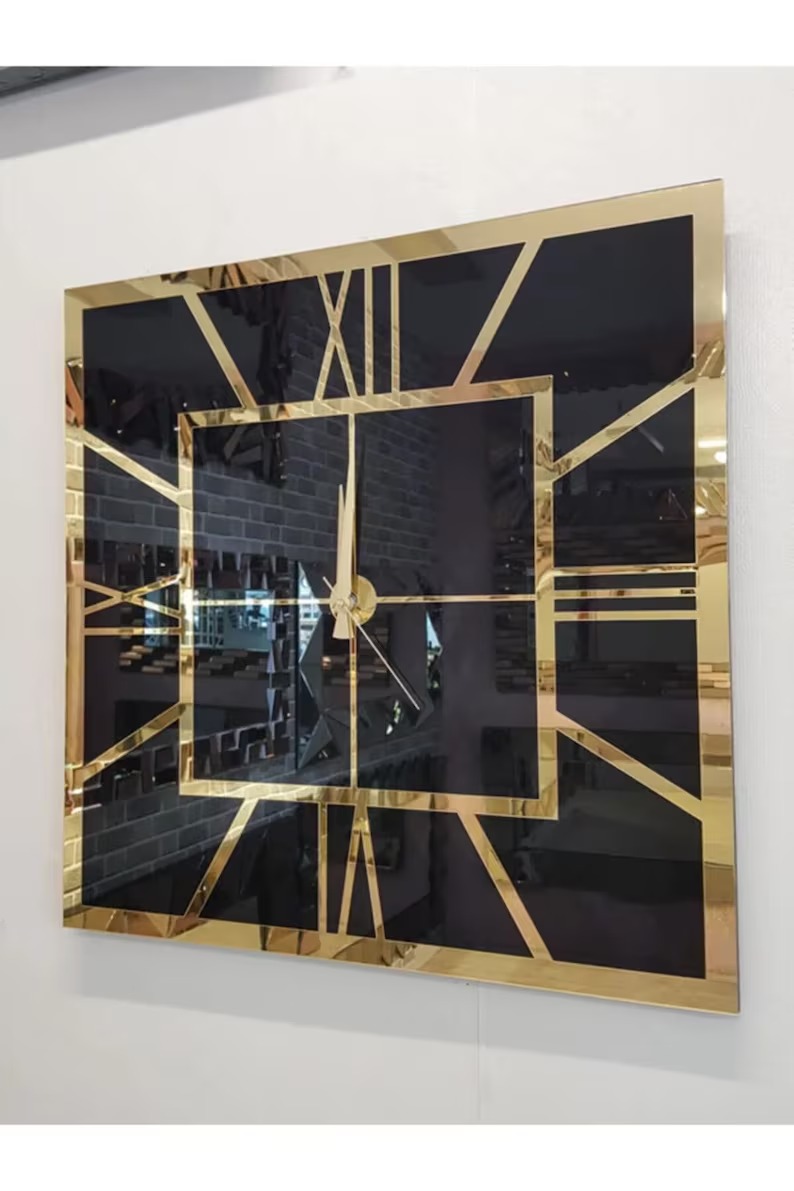
The Golden Leaf’s warm gold-tone metal and organic form make it the easiest piece to incorporate into a wall composition. It sits naturally alongside a mirror, a wall art piece, or framed photographs. Place it at 5.5 feet centre, pair it with one other wall element on either side — and the wall becomes a considered arrangement rather than a single stranded object.
Fixes Mistake 3 (Wrong Material) — Proper Metal Depth
Full Metal Peacock Clock
Laser-cut metal at proper 1–2mm thickness. The peacock feather spread creates genuine shadow depth — the kind you cannot get from a painted flat dial. For rooms with marble floors, wooden furniture, or other premium materials — this is the clock that belongs there. Powder-coated for Indian humidity.
Common questions about wall clocks for Indian homes.
What is the best wall clock size for a large Indian living room?
For a living room with walls 10–14 feet wide, a clock between 24–36 inches (60–90 cm) works as a proper statement piece. Smaller pieces — 12–18 inch — look undersized on these walls and are better suited to bedrooms, studies, or corridors.
Is a metal wall clock better than wood for Indian conditions?
For most Indian homes — particularly in coastal cities, monsoon-humid regions, or any room without consistent AC — powder-coated metal is significantly more durable than painted wood or plastic. Metal at 1–2mm also has physical depth that creates shadow play, making it more visually interesting than flat-surface alternatives.
Which direction should a wall clock face in India?
Per Vastu Shastra, North or East wall placement is recommended. Avoid South walls. The clock face should be visible from the main seating or activity area of the room — not facing a wall, a door, or a corner where it cannot be seen clearly.
Where can I buy large metal wall clocks online in India with free delivery?
Shopps.in stocks metal, mosaic, and wooden wall clocks from ₹370 to ₹12,733, all IGST-inclusive with free all-India delivery. For custom sizes or bulk orders: WhatsApp +91-99468-28484 or 1800-203-7307.
Anita SharmaHome stylist with 8 years of residential projects across Delhi, Noida, and Jaipur. Certified Interior Décor Consultant. Anita writes about the small decisions that change how a room feels — and the obvious mistakes that are cheapest to fix before you make them.
Welcome to Nook, my cozy corner of the internet dedicated to all things homemade and delightful. Here, I invite you to join me on a journey of creativity, craftsmanship, and all things handmade with a touch of love. Let's get crafty!



Leave a Reply